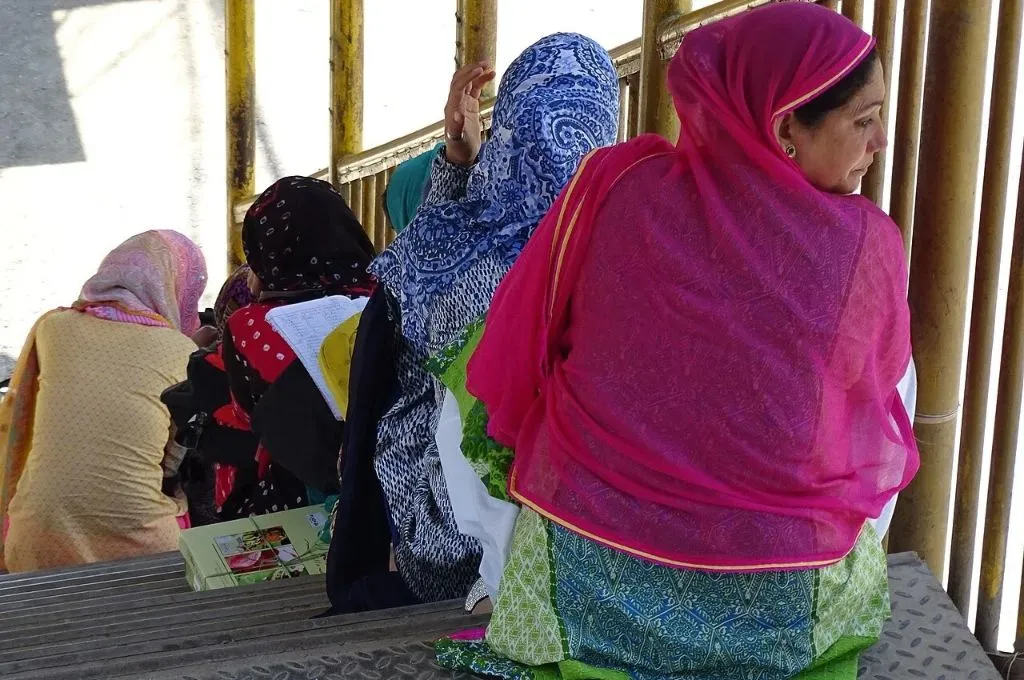
women sitting in front of a house on a raised brick platform--palliative care

A right to relief, comfort, and cure: Why palliative care matters

Up to 10 million Indians need palliative care each year, but few receive it. In this article, we break down myths about palliative care and explain why it is key for relieving pain, supporting treatment, and improving quality of life for people with serious illnesses.

IDR is a free resource. We will never go behind a paywall. So, if you like what you’re reading and find value in our articles, please support us by making a donation.


Latest

wooden blocks on brown table--AI for nonprofits

To use AI effectively, nonprofits must build reliable data systems
AI is only as powerful as the data that fuels it. To use it to its full potential, nonprofits have to create the infrastructure to extract, clean, structure, and document data effectively.
a close up shot of a matcha latte glass placed on napkins on a table--nonprofit humour

Gen-Z slang explained, social sector style: Part III
If you thought you’d finally understood Gen-Z slang, think again.
a digital sketch of Dr Carmo Noronha against a pale blue background--

IDR Interviews | Dr Carmo Noronha
Nonprofit veteran and disability rights champion Dr Carmo Noronha explains the importance of collaboration in designing inclusive learning environments in Meghalaya.
by Samme Massar | 2 min read
Small market stall displaying open sacks filled with different varieties of Hokh Syun arranged outside a shop--Hokh Syun

On Srinagar’s rooftops, a winter food tradition faces uncertain weather
For generations, Kashmiris have prepared and preserved dried vegetables—Hokh Syun—to survive harsh, isolated winters. But changing weather and a growing market for these foods are slowly pushing the tradition out of households.
by Mir Zuhaib Nissar | 4 min read
two women sitting on the floor in a classroom, with numbers and the kannada alphabet painted on the walls behind them--community organiser

The girl who refused to drop out
A day in the life of a young field coordinator in Raichur, Karnataka, reflecting her journey of almost dropping out of school to supporting herself, her family, and her community.
by Rubiya Begum | 7 min read

Bite-sized stories from the people closest to the action.


A day in the life of

Frontline workers and first responders share their insights from working at the grassroots.
two women sitting on the floor in a classroom, with numbers and the kannada alphabet painted on the walls behind them--community organiser

The girl who refused to drop out
A day in the life of a young field coordinator in Raichur, Karnataka, reflecting her journey of almost dropping out of school to supporting herself, her family, and her community.
A picture of Parmeet in black t-shirt and blue jeans, sitting on a couch--deaf community

A book club, sign language, and our fight for Deaf rights
A day in the life of a Deaf student and founder of a book club as he strives for awareness, inclusion, and building a shared space for the Deaf community.
a female forest guard puts out a forest fire in Mewar Biodiversity Park, Udaipur district, Rajasthan--forest guard

Why conservation needs connection: Guarding Rajasthan’s forests
A day in the life of a forest guard, who navigates gender roles, community needs, and conservation in Rajasthan.

Social change leaders chronicle their failures and lessons learnt.
Silhouetted birds perched on bare tree_leadership failure

Building team culture isn’t optional
A nonprofit co-founder reflects on how scaling rapidly unintentionally alienated employees, which led to cracks in organisational culture.
Aerial shot of women protestors sitting_well-being

Preparing for a marathon, not a sprint 
Dalit civil rights activist Thenmozhi Soundararajan on why failure is an opportunity to build power, how systems of oppression affect well-being, and what healing looks like for individuals and communities.
Barbed wire_nonprofits

Why don’t nonprofits talk about their failures?
A number of risks, both real and perceived, stop nonprofits from talking about failure. Here's how various stakeholders can work together to overcome them.

Conversations with visionaries on their life's work, and their efforts to challenge the status quo in our country.

Ever wondered how your donations help us?

When you support IDR, you help us remain editorially and financially independent, and importantly, sustainable. Being a part of our community is not just a monetary exercise; it signals your commitment to the social sector, to information you can trust, and to creating impact. If you wish to support us with a donation please click on the donate now button below.

The support of our community means everything to us

Members of our community have given us pro bono support, spread the word about us within their circles, and also fundraised on behalf of IDR. If you have other ideas about how you can help us do what we do, better, please reach out to us. We’d love to hear them.
Insights and analysis of specific sectors in the development arena—what works, what doesn't, and what needs to change.

See all coverage by topic:
  • Agriculture
  • Education
  • Environment
  • Health & Well-being
  • Livelihoods
  • Rights
  • Water & Sanitation

  • A right to relief, comfort, and cure: Why palliative care matters
    Up to 10 million Indians need palliative care each year, but few receive it. In this article, we break down myths about palliative care and explain why it is key for relieving pain, supporting treatment, and improving quality of life for people with serious illnesses.

    IDR Interviews | Dr Carmo Noronha
    Nonprofit veteran and disability rights champion Dr Carmo Noronha explains the importance of collaboration in designing inclusive learning environments in Meghalaya.

    On Srinagar’s rooftops, a winter food tradition faces uncertain weather
    For generations, Kashmiris have prepared and preserved dried vegetables—Hokh Syun—to survive harsh, isolated winters. But changing weather and a growing market for these foods are slowly pushing the tradition out of households.


    IDR Interviews | Dr Carmo Noronha
    Nonprofit veteran and disability rights champion Dr Carmo Noronha explains the importance of collaboration in designing inclusive learning environments in Meghalaya.

    The girl who refused to drop out
    A day in the life of a young field coordinator in Raichur, Karnataka, reflecting her journey of almost dropping out of school to supporting herself, her family, and her community.

    “You can’t build inclusion on policy alone—you have to live it every day.”
    Keshav Suri speaks about activism, building queer-affirming workplaces, and why real change comes from grassroots movements.

    Skills and functions that are core to growing programmes and organisations.

    See all coverage by topic:
  • Board & Governance
  • Fundraising & Communications
  • Leadership & Talent
  • Monitoring & Evaluation
  • Programme
  • Technology

  • To use AI effectively, nonprofits must build reliable data systems
    AI is only as powerful as the data that fuels it. To use it to its full potential, nonprofits have to create the infrastructure to extract, clean, structure, and document data effectively.

    Building a finance function for your nonprofit as it grows
    An effective finance function is mission critical for nonprofits. Here’s a practical guide to building a finance function that ensures that money flows where it is intended, reporting is reliable, and decision-makers have the insights they need.

    Making technology work through shared learning
    Technology adoption becomes difficult when nonprofits work in siloes. Learning in cohorts enables shared problem-solving and faster implementation across the sector.