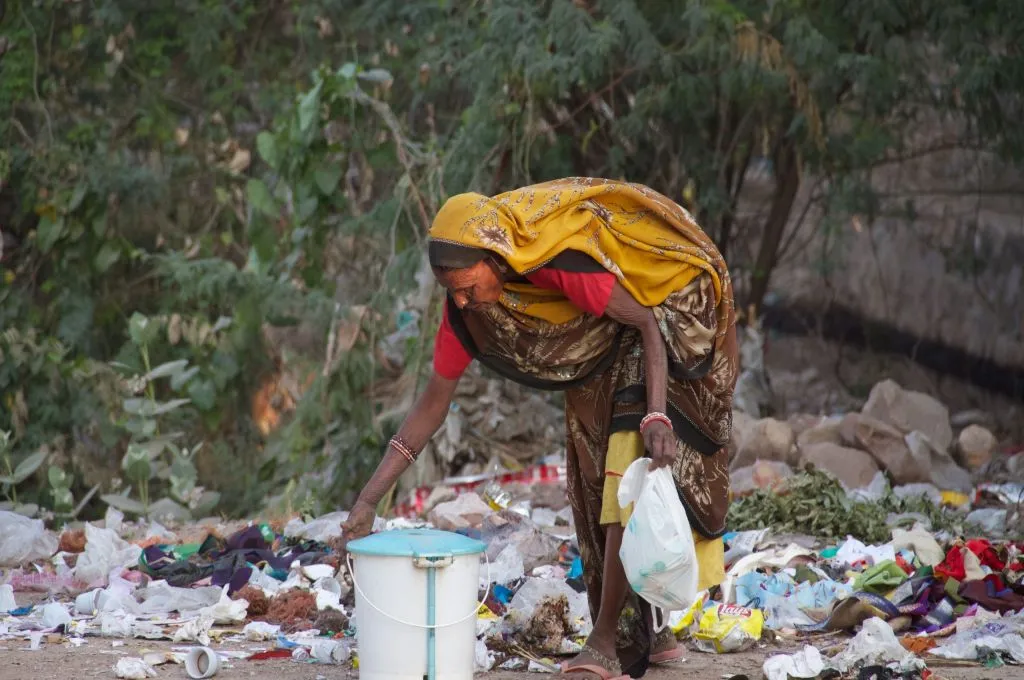
An elderly woman wearing a sari bends down to collect waste from the ground, holding a plastic bag beside a white bucket. She is surrounded by scattered garbage in an outdoor area with sparse trees in the background--waste management

The case for counting rural plastic waste

Rural India generates millions of tonnes of unmeasured plastic waste. Integrating village-level data through existing platforms can help build a truly inclusive circular economy.
IDR is a free resource. We will never go behind a paywall. So, if you like what you’re reading and find value in our articles, please support us by making a donation.


Latest

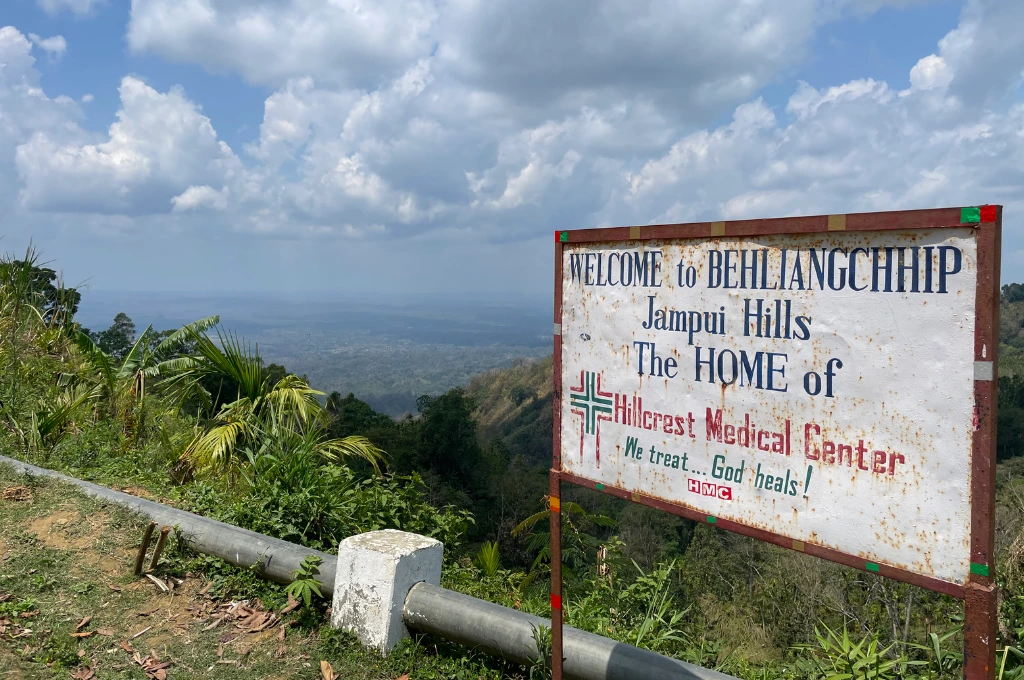
A board saying

Tripura’s only hill station treads between tourism and heritage
The entrepreneurial spirit of the homestay owners and government initiatives have placed Jampui on the tourism map. But there are concerns about sustainability.
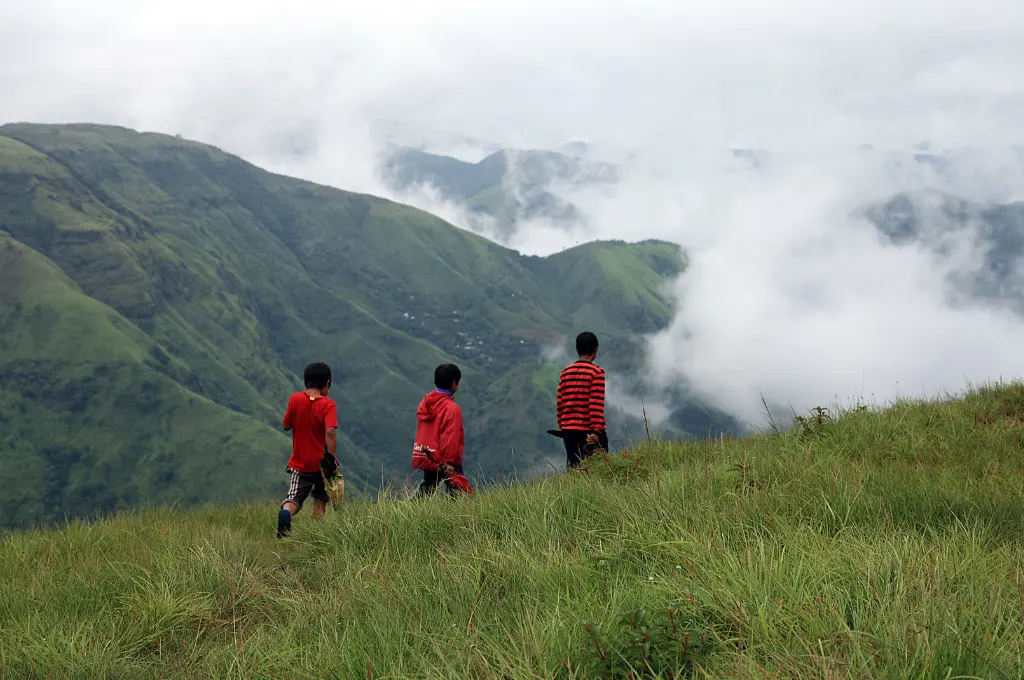
three young boys on a hill near Laitmawsiang, Meghalaya--northeast india hiring

Hiring for the long run in Northeast India
Funding constraints shape hiring in Mizoram and Meghalaya, prompting nonprofits to prioritise passion and train skills on the job.
a black and white photo of a wall clock--nonprofit humour

It’s 2016
How much has really changed?
by Shriya Roy | 2 min read
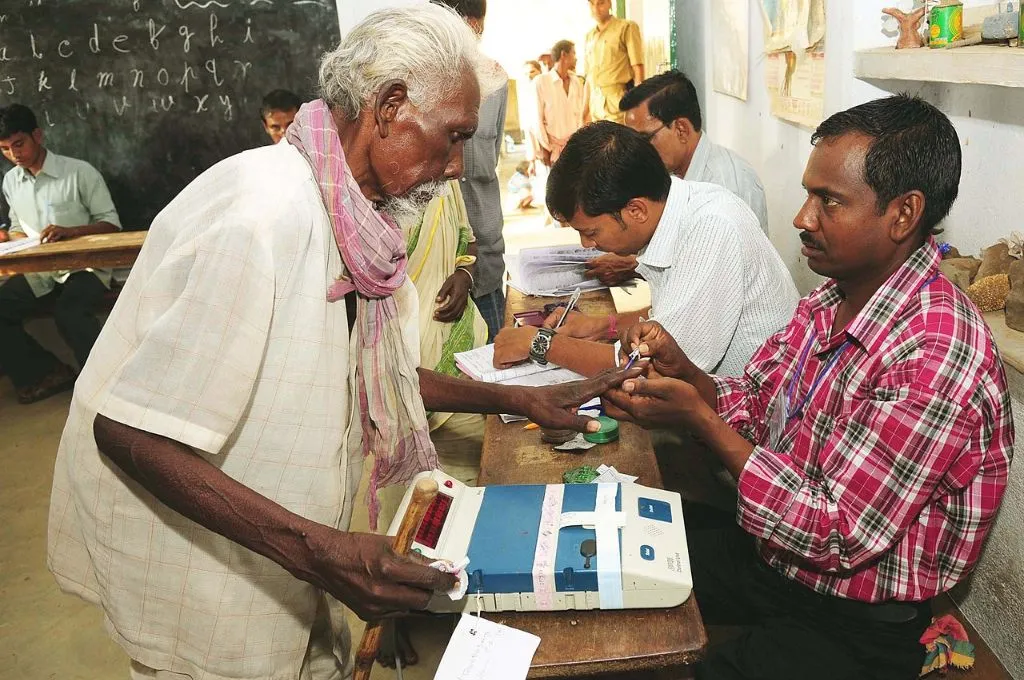
The image shows an elderly male voter inside a polling booth station in a village. He stands in front of a table as a polling booth officer applies blue ink to his index finger.--local self-governance

From the village to the Republic
The idea of local self-governance has been a key part of India’s political imagination. However, development has often meant centralisation, undermining communities’ rights over jal, jangal, and zameen.
by Ramesh Sharma | 6 min read
hexagonal lattice stone windows--queer-affirmative therapy

Therapist training in India overlooks queer experiences
Why is queer-affirmative mental health therapy so inaccessible and expensive? A key reason may be the absence of queer-focused pedagogies in psychology education.
by Kanav Narayan Sahgal | 8 min read

Bite-sized stories from the people closest to the action.


A day in the life of

Frontline workers and first responders share their insights from working at the grassroots.
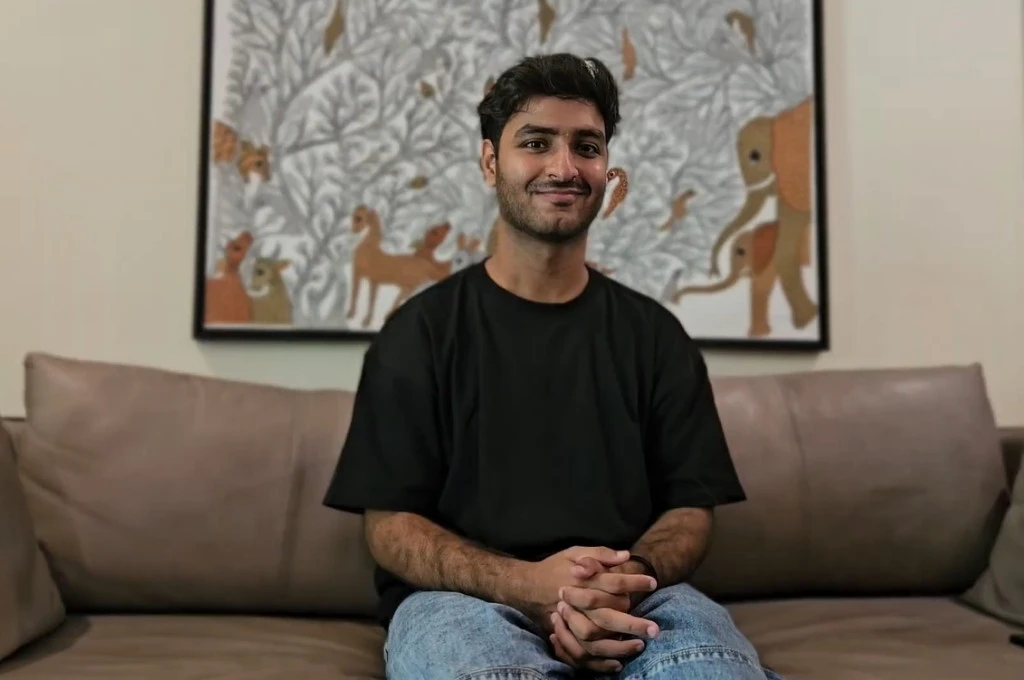
A picture of Parmeet in black t-shirt and blue jeans, sitting on a couch--deaf community

A book club, sign language, and our fight for Deaf rights
A day in the life of a Deaf student and founder of a book club as he strives for awareness, inclusion, and building a shared space for the Deaf community.
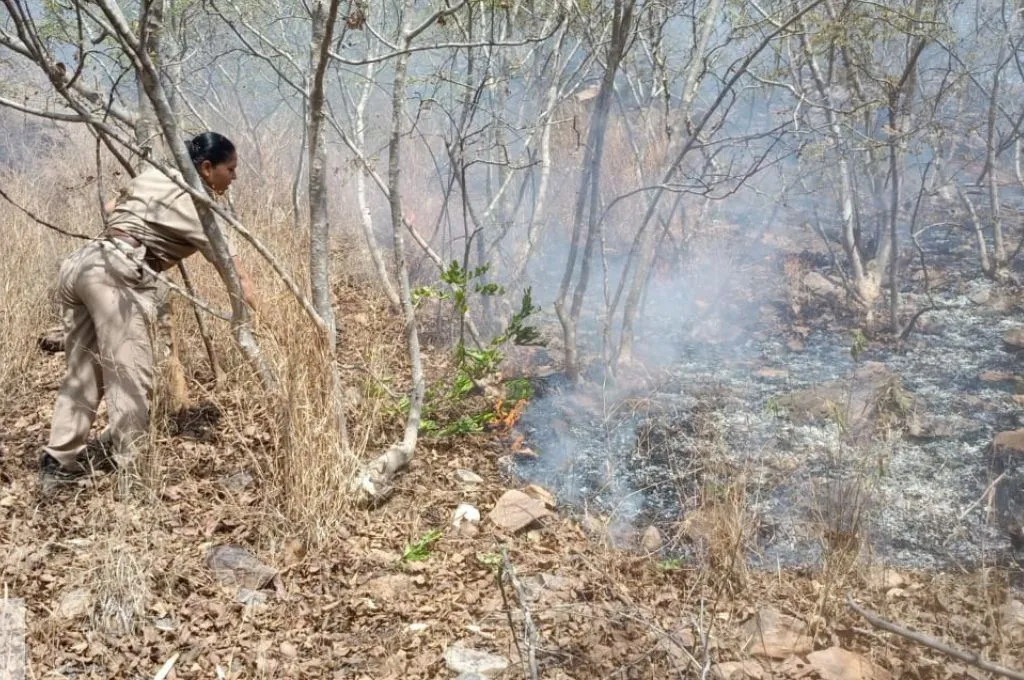
a female forest guard puts out a forest fire in Mewar Biodiversity Park, Udaipur district, Rajasthan--forest guard

Why conservation needs connection: Guarding Rajasthan’s forests
A day in the life of a forest guard, who navigates gender roles, community needs, and conservation in Rajasthan.
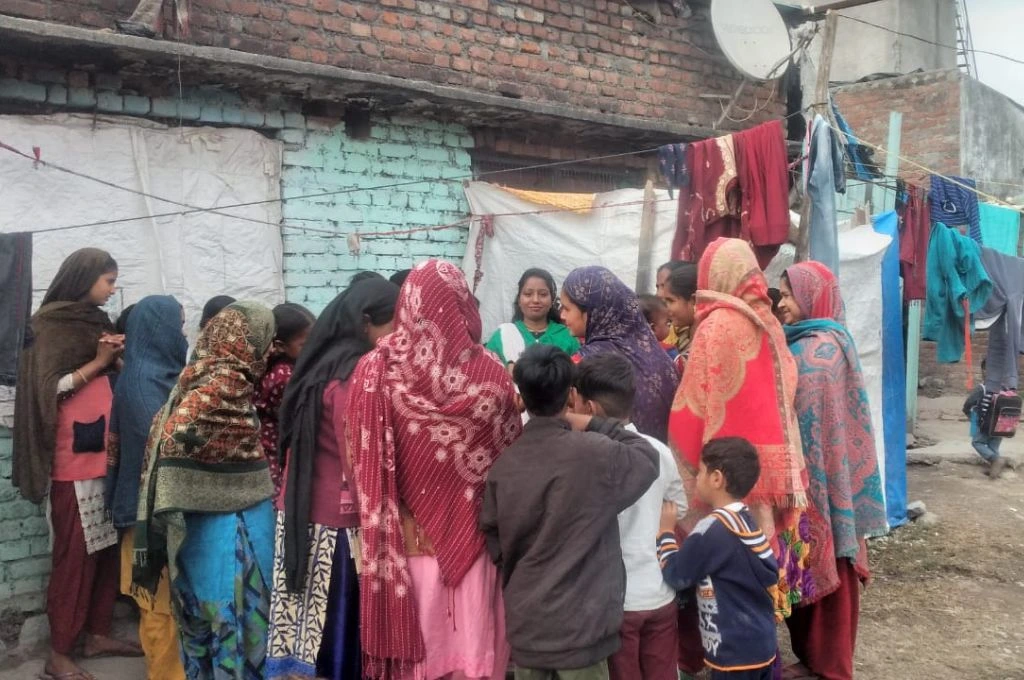
Women in a village standing in a group and talking_mental health stigma

From self to society: Navigating silence and stigma around mental health
A day in the life of a community health worker in Dehradun, Uttarakhand, who tackles mental health stigma through trust and support—in her own life and for the people she serves.

Social change leaders chronicle their failures and lessons learnt.
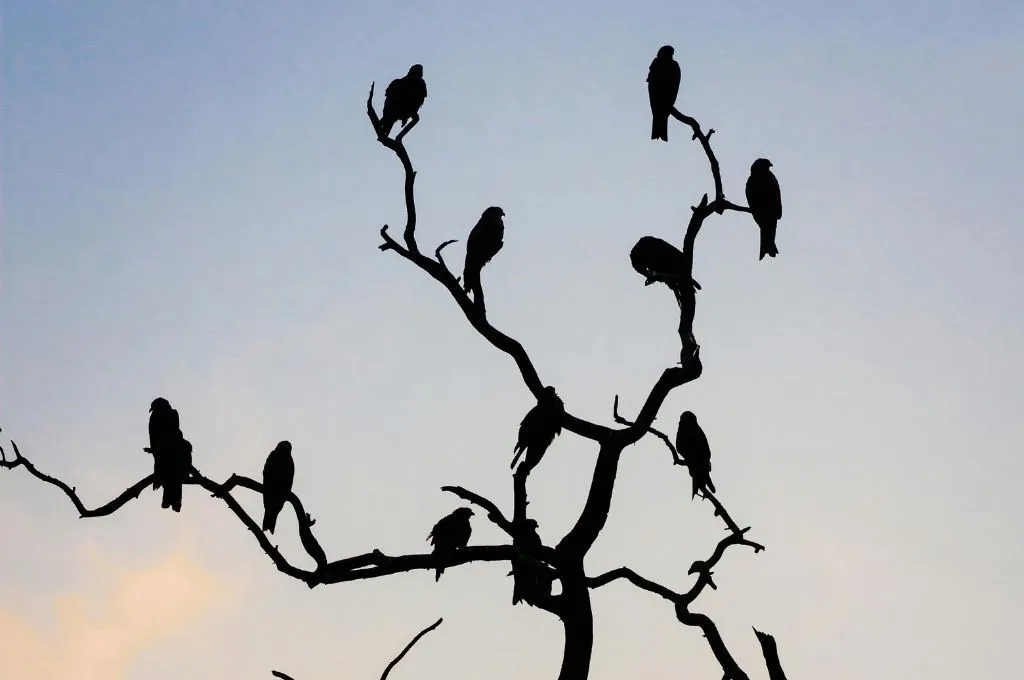
Silhouetted birds perched on bare tree_leadership failure

Building team culture isn’t optional
A nonprofit co-founder reflects on how scaling rapidly unintentionally alienated employees, which led to cracks in organisational culture.
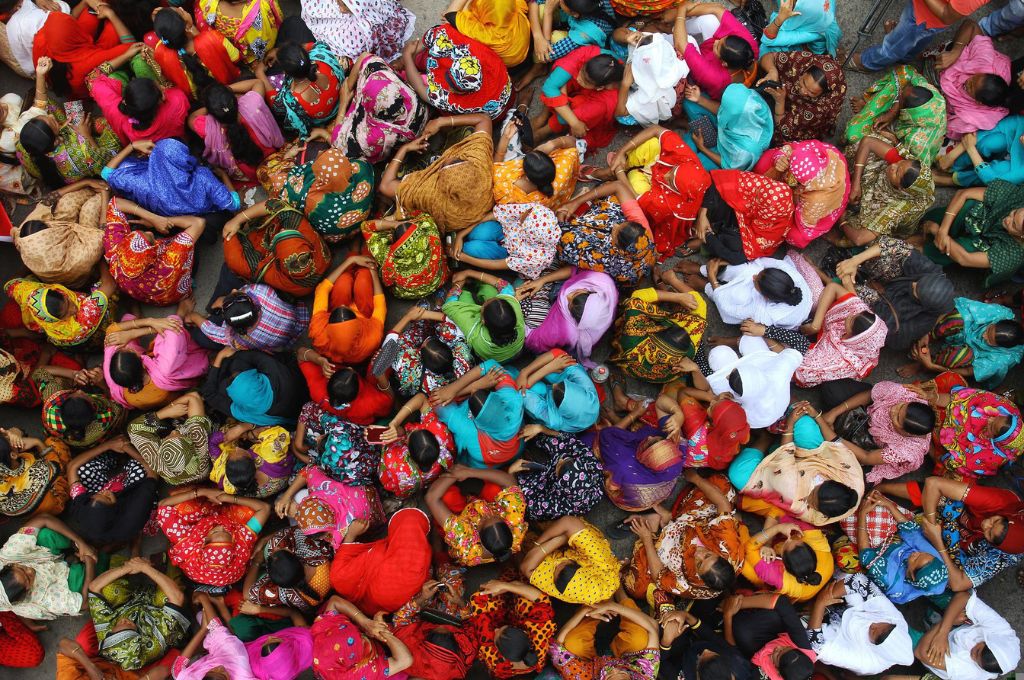
Aerial shot of women protestors sitting_well-being

Preparing for a marathon, not a sprint 
Dalit civil rights activist Thenmozhi Soundararajan on why failure is an opportunity to build power, how systems of oppression affect well-being, and what healing looks like for individuals and communities.
Barbed wire_nonprofits

Why don’t nonprofits talk about their failures?
A number of risks, both real and perceived, stop nonprofits from talking about failure. Here's how various stakeholders can work together to overcome them.

Conversations with visionaries on their life's work, and their efforts to challenge the status quo in our country.

Ever wondered how your donations help us?

When you support IDR, you help us remain editorially and financially independent, and importantly, sustainable. Being a part of our community is not just a monetary exercise; it signals your commitment to the social sector, to information you can trust, and to creating impact. If you wish to support us with a donation please click on the donate now button below.

The support of our community means everything to us

Members of our community have given us pro bono support, spread the word about us within their circles, and also fundraised on behalf of IDR. If you have other ideas about how you can help us do what we do, better, please reach out to us. We’d love to hear them.


Insights and analysis of specific sectors in the development arena—what works, what doesn't, and what needs to change.

See all coverage by topic:
  • Agriculture
  • Education
  • Environment
  • Health & Well-being
  • Livelihoods
  • Rights
  • Water & Sanitation

  • The case for counting rural plastic waste
    Rural India generates millions of tonnes of unmeasured plastic waste. Integrating village-level data through existing platforms can help build a truly inclusive circular economy.
    Therapist training in India overlooks queer experiences
    Why is queer-affirmative mental health therapy so inaccessible and expensive? A key reason may be the absence of queer-focused pedagogies in psychology education.

    Tariffs, war, and a 600-year-old craft: Kashmir’s paper-mache artisans face uncertainty
    From intricate masks to Christmas ornaments, Kashmiri paper-mache has long served an international market. As global political and economic conflicts disrupt exports, artisans fear a loss of not just livelihoods, but identity.


    The case for counting rural plastic waste
    Rural India generates millions of tonnes of unmeasured plastic waste. Integrating village-level data through existing platforms can help build a truly inclusive circular economy.
    Hiring for the long run in Northeast India
    Funding constraints shape hiring in Mizoram and Meghalaya, prompting nonprofits to prioritise passion and train skills on the job.

    From the village to the Republic
    The idea of local self-governance has been a key part of India’s political imagination. However, development has often meant centralisation, undermining communities’ rights over jal, jangal, and zameen.

    Skills and functions that are core to growing programmes and organisations.

    See all coverage by topic:
  • Board & Governance
  • Fundraising & Communications
  • Leadership & Talent
  • Monitoring & Evaluation
  • Programme
  • Technology

  • Hiring for the long run in Northeast India
    Funding constraints shape hiring in Mizoram and Meghalaya, prompting nonprofits to prioritise passion and train skills on the job.

    Three fellows in a boat
    A free-flowing conversation among three social sector fellows on public policy and the importance of youth led development in shaping a better Tripura.

    Multimedia storytelling for nonprofits: Your phone can do it all
    Simple methods for creating engaging videos, audios, and graphics for your nonprofit.